
- Heated floor system installation Service
Custom Heated Floor Systems Built
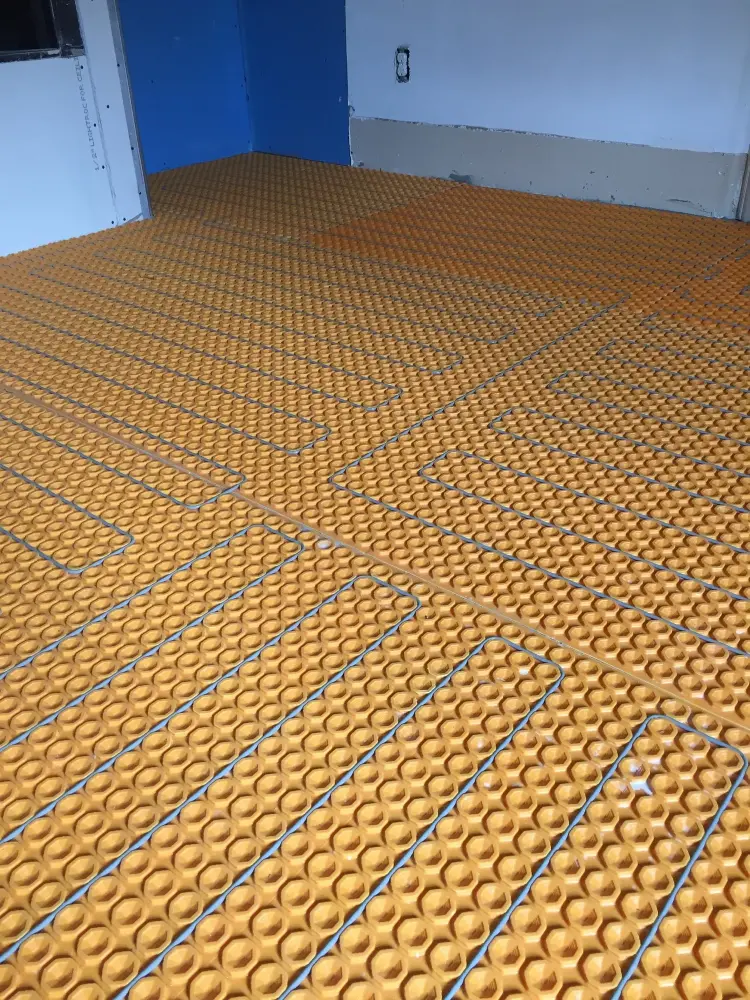
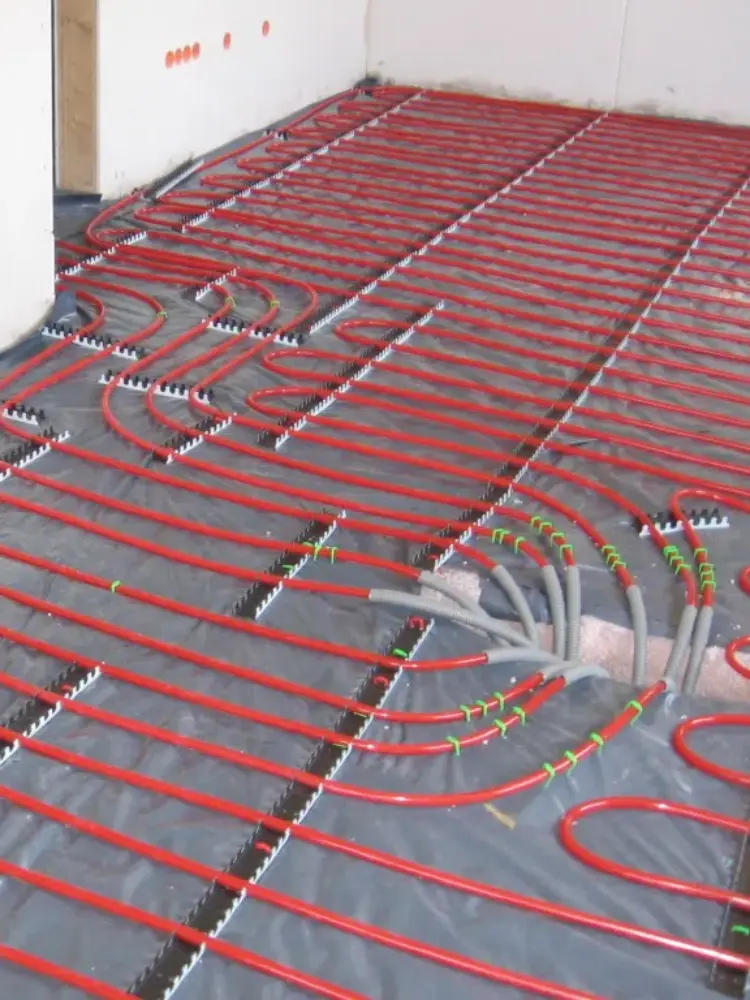
Heated floor system installations using proper heat reflective membrane and optimized cable layout, thermostat placement to ensure optimum heat efficiency and long life.
Electric vs. Hydronic Heated Floor Systems
Choosing a heated floor system isn’t just about warmth — it’s about which technology actually fits your space, your budget, and how the room gets used.
Electric Radiant Floor Heating
Electric systems use thin heating cables or mats installed directly beneath your finished floor, warmed by your home’s existing electrical supply. They’re the go-to choice for single-room projects — a bathroom, a kitchen, a mudroom — where you want warmth in one specific area without touching the rest of the house. Electric systems heat up faster than hydronic and are considerably simpler to retrofit into an existing renovation.
Hydronic Radiant Floor Heating
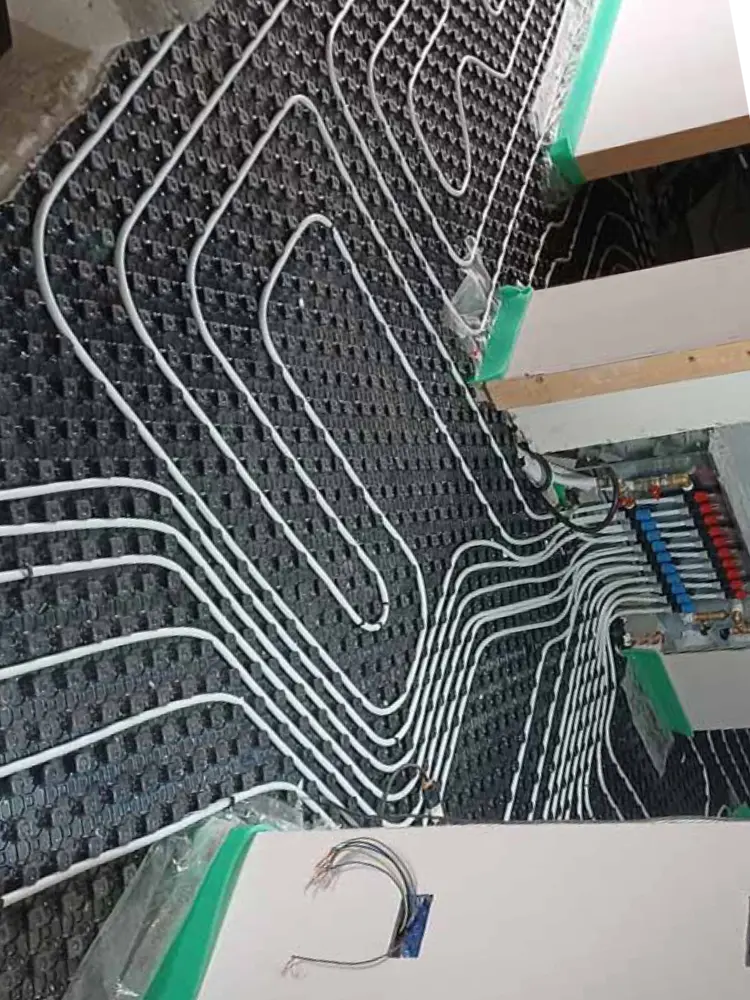
Hydronic systems circulate heated water through tubing installed beneath the floor, run off a boiler or heat pump. This is the system to consider for whole-home heating, since it costs less to operate at scale than electric once you’re covering multiple rooms or an entire level. It takes more planning to install — tubing, a heat source, and manifold connections all need to be coordinated — but it pays that back in long-term operating cost for larger installations.
- Recent Work
Showcasing Our Heated Floor System Built
39+
Years Experience
Improving homes with expert craftsmanship for years
1200 +
Projects Completed
Over 250 successful projects delivered with quality and care
05
Skilled Tradespeople
Our team of 05 experts ensures top-quality results
1200+
Client Satisfaction
All of our clients are satisfied with our work and service
What Floors Work with In-Floor Heating?
Tile & Natural Stone
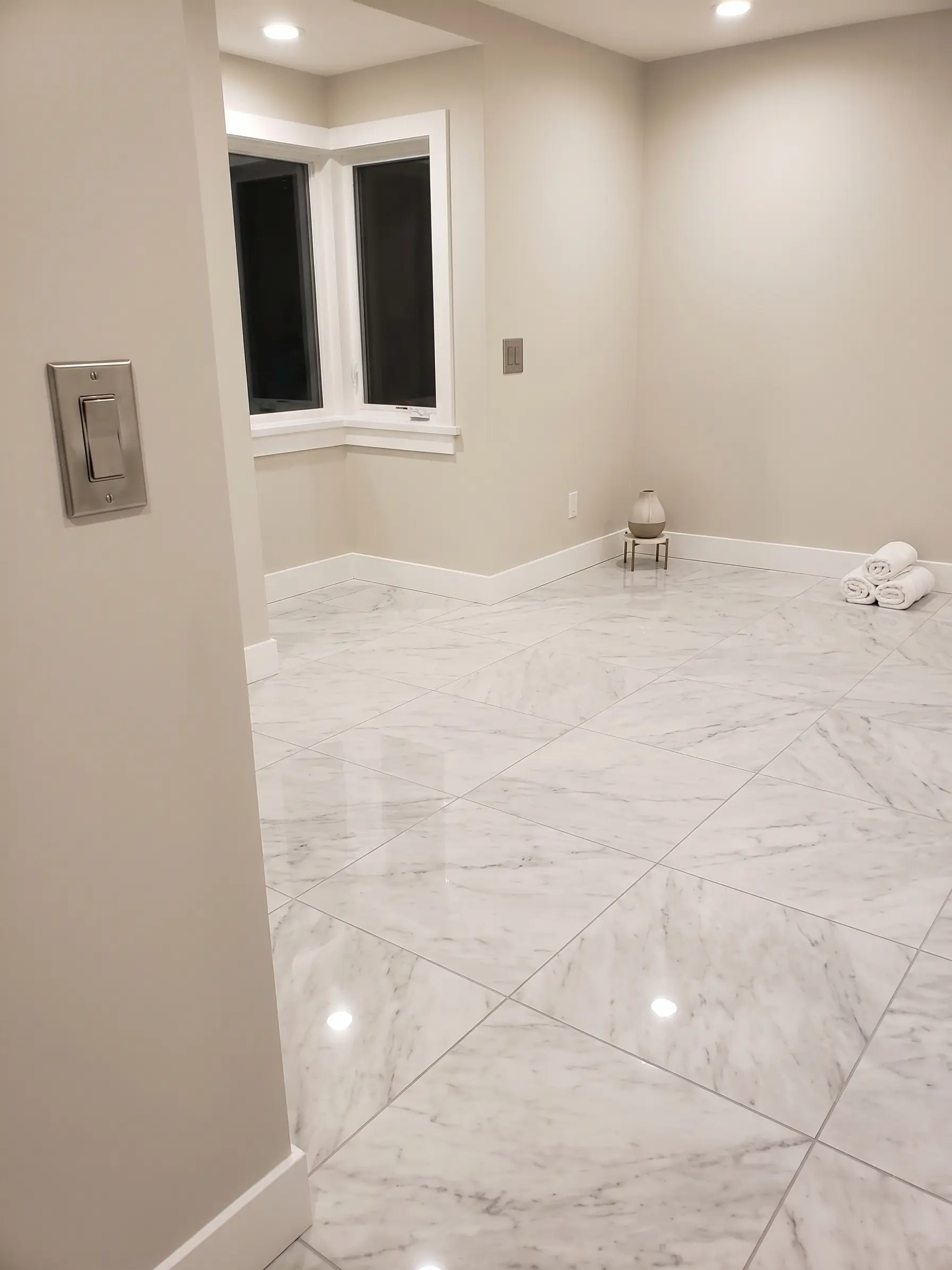
Tile and natural stone are the best conductors of radiant heat available — they warm up efficiently and hold that warmth longer than almost any other flooring material. It’s also the pairing we install most often, since heated floors and tile go hand in hand in bathrooms and kitchens across Waterloo Region.
Hardwood, Laminate & Vinyl
Engineered hardwood, laminate, and vinyl can all work over a heated floor system, provided the product is manufacturer-approved for radiant heat and the system is set up to stay within that product’s safe temperature range. We’ll confirm compatibility with your chosen flooring before installation, so there’s no guesswork about whether your floor and your heat source are actually built to work together.
- Why Choose Us
Built for the Perfect Alignment and Lasting Results
- Latest Technologies
- 5 Years Warranty
- WSIB Insured
- High-Quality Designs
- On-Time Guarantee
- Local Experts
Every heated floor system we install starts with a heat reflective membrane, which directs warmth up into the room instead of letting it bleed down into the subfloor where it’s wasted. From there, we plan a precise cable layout — spacing the heating element to deliver even warmth edge to edge, with no cold spots and no unnecessary overlap that shortens the cable’s lifespan.
Thermostat placement matters as much as the floor itself. We position sensors where they’ll read an accurate room temperature, not next to a heat source or in a drafty corner that throws off the whole system’s calibration. The result is a floor that heats evenly, responds accurately to your thermostat, and holds up for years without hot spots or dead zones. See our tile setting process
Where We Install Heated Floors?
1. Bathrooms.
Nothing changes a bathroom’s daily experience like a warm floor underfoot first thing in the morning. Bathrooms are also the most common single-room installation we do, since the space is small enough to heat efficiently on an electric system. See our waterproof shower builds
2. Kitchens.
Kitchen floors take constant foot traffic and cold mornings standing at the counter — a heated floor turns that into one of the more comfortable rooms in the house instead of one of the coldest.
3. Basements.
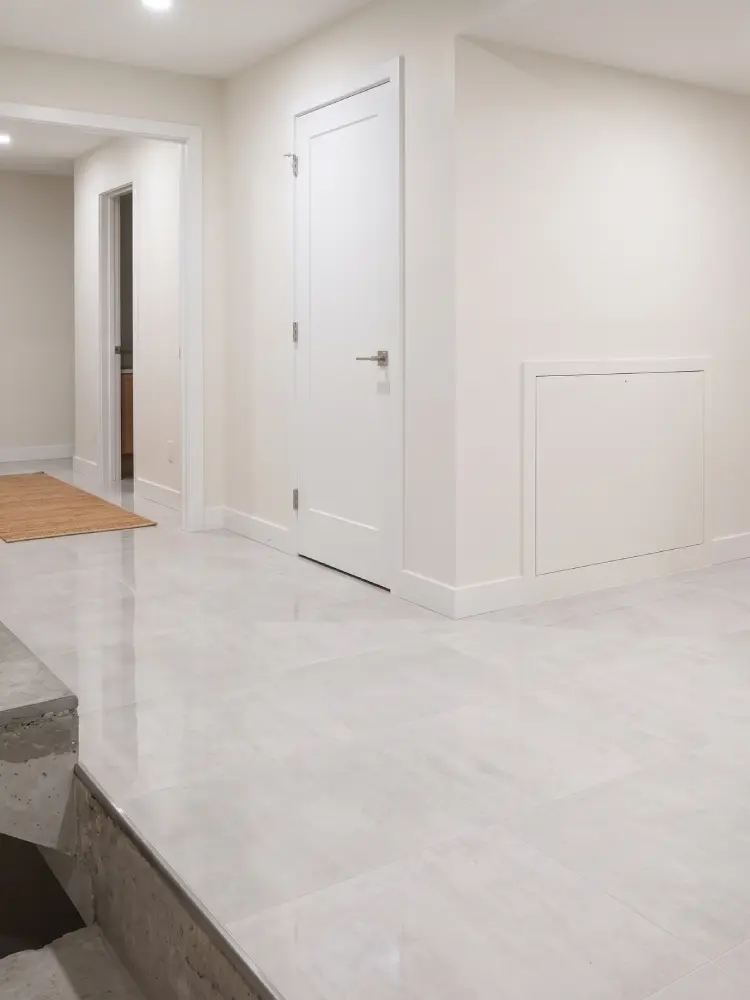
Basements sit directly on or near grade, which makes them naturally colder than the rest of the home regardless of the season. A heated floor system addresses that at the source, rather than trying to compensate with space heaters or turning up the whole-house thermostat. Ask about subfloor and joist strengthening
Why Choose In-Floor Heating?
Energy Efficiency
Radiant floor heating warms the objects and people in a room directly, rather than heating and circulating air the way a forced-air furnace does. That means less energy lost to duct leakage or air escaping every time a door opens, and a system that’s genuinely more efficient to run over the course of a winter.
Comfort & Air Quality
Because radiant systems don’t rely on moving air, they don’t stir up dust, allergens, or airborne particles the way forced-air heating can. The result is a quieter, cleaner-feeling home — no vents, no blower noise, just even warmth from the floor up
Safety & Reliability
Every system we install includes proper thermostatic control and overheat protection, so the floor regulates itself rather than relying on you to monitor it. Combined with our 5-year warranty, that means a heated floor you can trust to perform winter after winter without surprises.
- Project Before & After
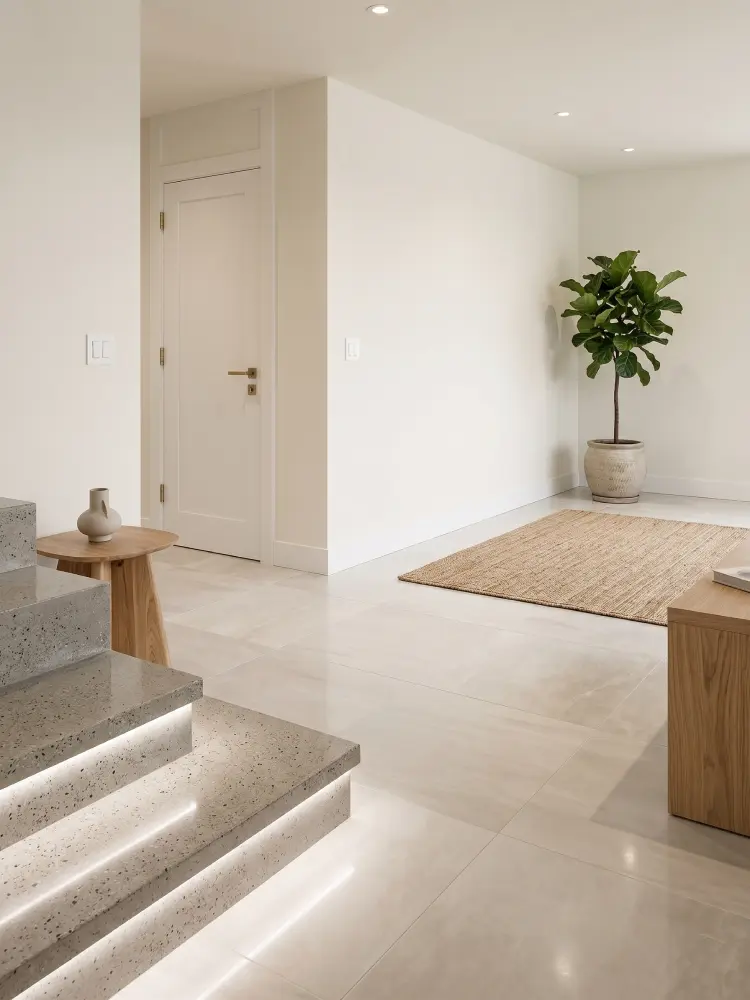
See the Complete Before & After Transformation
What Affects the Cost of a Heated Floor Installation?
Heated floor pricing depends on a handful of specific factors, and we account for all of them in your written quote:
- System type — electric systems typically cost less upfront than hydronic, though hydronic is more economical to run at whole-home scale
- Room size — larger areas mean more cable or tubing, and more labour to install it
- Flooring material — tile and stone pair straightforwardly with heated floors; hardwood and laminate require additional compatibility planning
- Thermostat features — basic manual controls vs. Wi-Fi and programmable options
- Scope — a single bathroom retrofit versus a whole-home hydronic installation are very different projects
We provide a detailed quote after seeing the space in person, so the number in your written quote is the number you pay.
Frequently Asked Questions
Electric systems use heating cables or mats powered by your home's electrical supply and are best suited to single rooms. Hydronic systems circulate heated water through tubing connected to a boiler or heat pump, and are more cost-effective for heating an entire home.
Cost depends on system type, room size, and flooring material. Electric systems are generally more affordable for single-room installs, while hydronic systems cost more upfront but run more economically across a whole home. We provide a detailed written quote after seeing your space.
A single-room electric installation typically takes 1 to 3 days, including subfloor prep, cable layout, and testing. Whole-home hydronic systems take longer due to added plumbing and system coordination.
Will heated floors raise my floor height?
Yes — most heated floor systems add roughly ½ inch to your finished floor height. We account for this in planning so thresholds, doors, and cabinetry all line up correctly.
Is in-floor heating safe?
Yes. Every system we install includes thermostatic control and overheat protection, and is installed to code by our team. Properly installed heated floors are reliable and safe for daily use for years.
What areas do you serve?
We serve Waterloo, Kitchener, Cambridge, Guelph, and the surrounding region.